How Many Follow-Ups Does It Really Take to Close a Sale?
 Abhyank Srinet
Most people think one or two follow-ups are enough. You send a message, maybe remind once, and if there’s no reply, you move on. But that’s exactly why most sales never happen. According to the Brevet Group, 80% of sales require 5 or more follow-ups — yet 44% of salespeople give up after just one. That gap is where most deals are lost. Not because the lead wasn’t interested, but because the follow-up stopped too early. Leads don’t go cold. They get busy, distracted, or unsure. Your message gets pushed down their WhatsApp list, and without a timely follow-up, the opportunity disappears.
In this guide, you’ll learn exactly how many follow-ups it takes to close a sale, when to send them, and what to say at each step so you stop losing deals that were already yours.
How Many Follow-Ups Does It Take to Close a Sale?
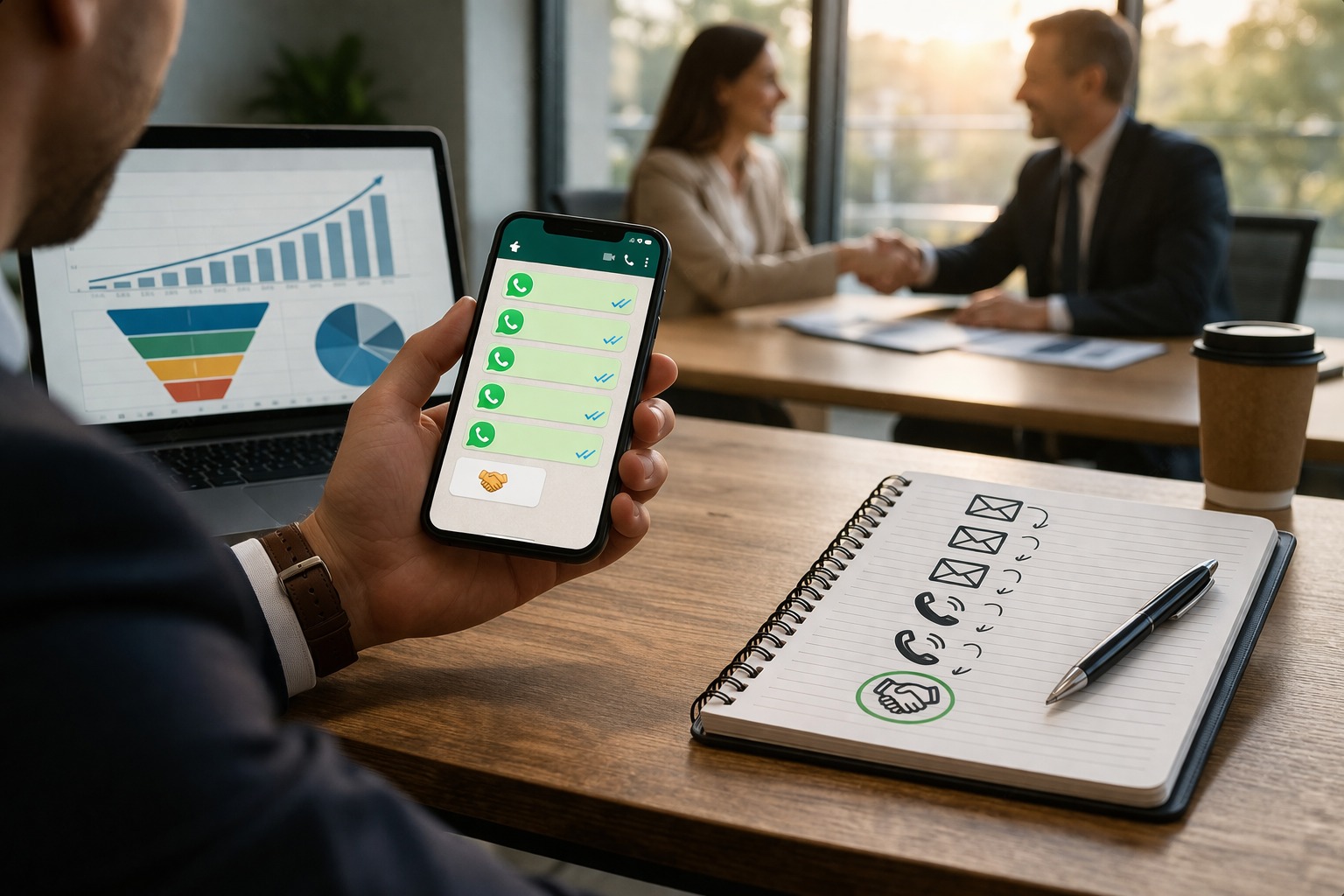
The honest answer is 5. Research shows that 80% of sales need at least 5 follow-ups to close. But 44% of salespeople stop after just 1.
On WhatsApp it can be slightly fewer — because messages get read faster and replies come quicker than email. But the pattern is the same. Most deals don't close on the first or the second. They close when you stay in touch long enough.
Here is how a simple 5-step follow-up looks in real life:
Follow-up 1 on Day 1 — check they got your message.
Follow-up 2 on Day 3 — share something useful.
Follow-up 3 on Day 7 — ask a direct question.
Follow-up 4 on Day 14 — one last try.
Follow-up 5 on Day 21 — close or pause.
Most people never get to Day 7. That is why most deals go nowhere.
The Numbers That Show Why Most Deals Go Cold
Here are the real numbers.
80% of sales need 5 or more follow-ups to close. 44% of salespeople give up after just 1 follow-up. WhatsApp messages have a 98% open rate, compared to around 20% for email. Leads who get a reply within 5 minutes are 21 times more likely to respond than those who wait 30 minutes or more.
What this means in plain terms: most of your leads are not lost because they said no. They are lost because you stopped before they were ready. The buyer was still thinking. You just weren't there when they made up their mind.
Key sales follow-up statistics reveal a consistent pattern:
Most deals close after multiple follow-ups, not the first few attempts: Buyers often need repeated touchpoints before they are ready to move forward. Early messages create awareness, but later follow-ups influence decisions.
A majority of sales reps stop following up far too early: Many teams stop after one or two follow-ups, even though the prospect has not rejected the offer.
Follow-ups sent later in the sales cycle often see higher response rates: Once buyers finish comparing options or align internally, they are more likely to respond.
Consistent follow-up improves overall sales conversion: Teams that follow a structured follow-up rhythm convert more leads without increasing lead volume.
Silence usually means delay, not disinterest: In most cases, prospects go quiet because of timing, not because they have lost interest.
These insights explain why so many deals are lost quietly. Not because the product was wrong, but because the follow-up stopped before the buyer was ready.
The Sales Follow-Up Timeline: When and How Often to Follow Up

Knowing how many follow-ups to close a sale is only half the answer. The other half is understanding when those follow-ups should happen. Timing plays a bigger role in sales conversion follow-up than most teams realize. Follow-ups that arrive too soon feel pushy, while follow-ups that come too late are often ignored.
A strong sales follow-up timeline is not based on guesswork. It follows buyer behavior and decision stages.
Here is how follow-ups typically work across a real sales cycle:
Initial follow-up (within the first day): This follow-up confirms interest and keeps the conversation active while the lead still remembers the interaction.
Early-stage follow-ups (next few days): These messages provide clarity, answer questions, and support evaluation. This stage sets the foundation for trust.
Mid-stage follow-ups (over the next one to two weeks): Buyers are usually comparing options here. Follow-ups during this phase help remove doubts and guide decision-making.
Late-stage follow-ups (after longer gaps): These follow-ups reconnect when timing changes. Many deals close here because the buyer is finally ready.
Follow up more often at the start. Slow down as time goes on. But never stop completely. Most deals are lost not because you followed up too much, but because you stopped before the buyer made up their mind.
WhatsApp follow-up timing works a little differently from email. People see WhatsApp messages faster, so you don't need to wait as long between messages. Reply within 5 minutes when a new lead messages you. If they don't reply, follow up the next day. Then day 3. Then day 7. Then day 14. Keep messages short — one question per message. WhatsApp is personal. Long paragraphs feel like spam here.
Also read: How Many Follow-Ups Does It Take to Close a Sale on WhatsApp
Why Sales Need Multiple Follow-Ups
Most buyers do not make a decision immediately after the first interaction. Even when interest is genuine, decisions slow down because buyers need time to compare options, discuss internally, or wait for the right moment. This gap between interest and action explains why understanding how many follow ups to close a sale is critical for consistent sales results.
From a practical sales follow-up process point of view, follow-ups exist to maintain continuity until the buyer is ready to act.
Sales need multiple follow-ups because buyers often:
Buyers take time for three simple reasons: First, they are comparing you with other options. Second, they need to check with their manager or team before saying yes. Third, they got busy — and your chat just slid down their WhatsApp list.
Need internal alignment or approval: Many purchases require input from managers or finance teams, which delays responses without reducing intent.
Shift focus to other priorities: Interest remains, but urgency drops. Follow-ups help bring the decision back into focus.
Delay due to timing constraints: Budget cycles, workload, or external factors pause decisions. Later follow-ups often reconnect at the right time.
Seek clarity before committing: Buyers hesitate when next steps or value are unclear. Follow-ups help resolve this hesitation.
Sales need multiple follow ups because decisions happen on the buyer’s timeline, not the seller’s. Consistent follow-up ensures the opportunity stays open until that decision is made.
Also read: How to Automate WhatsApp Follow-Ups with Kraya.Ai
Common Follow-Up Mistakes That Cost You Sales
Most sales teams understand the importance of follow-ups, yet deals still slip through. The reason is not lack of effort, but poor execution. These mistakes break momentum, confuse buyers, or make follow-ups ineffective, even when interest is real. If you want to understand how many follow ups to close a sale, you also need to understand what not to do.
The most common sales follow up mistakes include:
Stopping follow-ups after sharing price or proposal: Many teams assume silence after pricing means rejection. In reality, this is when follow-ups matter the most.
Using the same message every time: Repeating “just checking in” adds no value. Each follow-up should have a clear purpose.
No clear follow-up sales process: Random follow-ups based on memory lead to gaps. Without structure, timing becomes inconsistent.
Poor follow up frequency in sales: Following up too often feels pushy. Waiting too long kills momentum. Both reduce response rates.
Treating silence as disinterest: Most buyers go quiet due to delay, not rejection. Stopping follow-ups early costs conversions.
Relying entirely on manual follow-ups: Manual tracking leads to missed reminders and uneven coverage across leads.
Sending messages at the wrong time on WhatsApp: A message at 11pm feels very different from one at 10am. WhatsApp is personal — people notice when you message them late at night. Stick to business hours. Early morning between 9 and 10am and late afternoon between 4 and 6pm get the best reply rates.
These sales follow up mistakes explain why teams struggle with sales conversion follow up even when lead quality is strong. Fixing these gaps is often more effective than generating more leads.
What to Say in Each Follow-Up

An effective follow-up sales process is not about sending more messages. It is about sending the right follow-up at the right stage of the buyer’s journey. Teams that convert well do not guess follow-up timing or rely on memory. They follow a clear process that aligns with how buyers actually make decisions.
When sales teams ask how many follow ups to close a sale, the real answer lies in how well this process is designed and followed.
A high-converting follow-up sales process usually includes:
Clear follow-up stages instead of random outreach: Each follow-up has a purpose, such as confirming interest, resolving doubts, or guiding next steps.
Different messages for different stages: Early follow-ups focus on momentum. Mid-stage follow-ups focus on clarity. Late-stage follow-ups focus on decision support.
Planned follow up frequency in sales: Follow-ups are closer together early and spaced out over time, matching buyer intent and urgency.
Defined exit and pause points: Teams know when to pause, when to re-enter later, and when a deal is truly closed or lost.
Consistent execution across all leads: Every lead receives the same minimum level of follow-up, not just the ones a rep remembers.
Knowing when to follow up is only half the job. The other half is knowing what to say. Here are four simple messages you can use on WhatsApp. Keep them short. One question each. No long paragraphs.
Follow-up 1 — Day 1: "Hi [Name], just checking — did you get a chance to look at what I sent? Happy to answer any questions."
Follow-up 2 — Day 3: "Hi [Name], thought this might be useful — [one line about a result or customer story]. Let me know if you'd like to know more."
Follow-up 3 — Day 7: "Hi [Name], quick question — is this still something you're looking at, or has something changed? Either way is fine, just want to know where things stand.
Follow-up 4 — Day 14: "Hi [Name], I'll stop following up after this — but wanted to check one last time if there's anything stopping you from moving ahead. Happy to help if there is."
That's it. Four messages. Fourteen days. Most deals that are going to close will close within this window. After that, move them to a cold list — but don't delete them. Check back in three months."
Also read: How to Improve Sales Performance
What to Say in Each Follow-Up (WhatsApp Examples)
Most people think follow-ups are about sending more messages. But that’s not true. The real difference comes from what you say in each message. If every follow-up sounds the same — “just checking” or “any update” — the lead slowly stops paying attention. Good follow-ups feel natural, helpful, and easy to reply to. Each message should have a small purpose — either to help the lead, guide them, or make it easier for them to decide.
Day 1 — First Follow-Up (Keep the Conversation Alive)
At this stage, the lead still remembers you. You don’t need to push anything. You just need to keep the conversation going and make it easy for them to respond.
WhatsApp message:
“Hey, just checking — did you get a chance to go through what I shared? Happy to help if anything is unclear.”
Day 2–3 — Value Follow-Up (Give Something Useful)
Instead of asking again, give them something helpful. This could be a small tip, a simple suggestion, or a quick insight. This makes your message feel useful, not repetitive.
WhatsApp message:
“Quick thought — most people in your situation usually start with [X option]. Want me to explain why it works better?”
Day 5–7 — Direct Check (Understand Where They Stand)
By now, the lead has had time to think. Instead of guessing, just ask clearly. Keep it simple and respectful so they feel comfortable replying.
WhatsApp message:
“Quick question — is this something you’re still exploring, or has something changed? Just want to understand.”
Day 8–10 — Light Urgency (Give a Reason to Act)
Many leads are interested but keep delaying. Here, you gently remind them without sounding pushy. Just give a small reason to act now.
WhatsApp message:
“Just a heads up — availability is getting a bit tight this week. Want me to check options for you?”
Day 14 — Final Follow-Up (Close the Loop)
This is where you end the conversation cleanly. Don’t disappear, and don’t keep chasing. Just give them an easy way to respond.
WhatsApp message:
“No worries if timing isn’t right. Should I close this for now, or follow up later?”
How Kraya AI Helps Teams Close More Deals With Follow-Ups
Most sales teams already know that follow-ups matter. The real challenge is executing them consistently. Reps forget. Timing slips. Leads fall through gaps. This is where systems outperform effort. Kraya AI is built to support the follow-up sales process so teams can handle more leads without missing opportunities.
Instead of asking how many follow-ups to close a sale for every deal, Kraya helps teams focus on when and how follow-ups should happen.
Kraya AI helps improve sales conversion follow up by:
Ensuring every lead gets timely follow-ups: Automated reminders and sequences prevent deals from going cold due to missed follow-ups.
Maintaining the right follow up frequency in sales: Follow-ups are spaced logically across the sales follow up timeline, reducing both over-messaging and long gaps.
Supporting a structured follow-up sales process: Leads move through clear stages, so reps always know what the next follow-up should be.
Reducing manual effort and memory dependency: Reps no longer rely on notes or reminders in their head. The system handles consistency.
Helping teams avoid common sales follow-up mistakes: Kraya prevents early drop-offs after pricing, missed nudges, and inconsistent outreach.
Keeping follow-ups helpful, not pushy: Messages are designed to support buyer decisions, not chase them.
Kraya sends your follow-ups automatically on WhatsApp — at day 1, day 3, day 7 — so you never forget and nothing slips. It also tells you which leads replied and who is ready to talk.
Your team stops spending time chasing cold leads. They only step in when someone has actually responded and shown real interest. That means less time wasted and more deals closed — without adding more people to your team.
If you want to see how it works, message us on WhatsApp and we will show you a live demo.
Related Blogs
Conclusion
The real answer to how many follow-ups to close a sale is not a fixed number. Most buyers need time, reminders, and clarity before they decide. Silence usually means delay, not rejection. Sales follow up statistics clearly show that deals close after multiple follow-ups, not after the first or second message. What matters most is having a clear sales follow up timeline and the right follow up frequency in sales. When follow-ups are random or manual, teams stop too early and lose good opportunities. A structured follow up sales process helps sales teams stay consistent without sounding pushy. When follow-ups are handled as a system, sales conversion follow up becomes easier, more predictable, and far more effective.
Frequently Asked Questions

Written by


