WhatsApp CRM India: 2026 Buying Guide & Comparison
 Abhyank Srinet
What Is a WhatsApp CRM?
A WhatsApp CRM is a customer relationship system built on top of the WhatsApp Business API (WABA) that adds shared inbox management, lead ownership rules, automated follow-up sequences, and conversation-level tracking. It turns WhatsApp from a personal messaging app into a structured sales channel.
Regular CRMs store contact data. A WhatsApp CRM manages message threads — who replied, who followed up, who owns the lead, and what happens next.
"We had three reps sharing one WhatsApp number. Two would reply to the same lead with different pricing. We lost four real estate deals in one month because of that. A proper WhatsApp CRM solved it in a week." — Sales head, real estate firm, Pune
Key Terminology You Need to Know
| Term | What It Means |
|---|---|
| WABA | WhatsApp Business API — compliant infrastructure for businesses sending beyond casual daily use. Required for shared inbox and automation. |
| BSP | Business Solution Provider — Meta-approved vendor that activates your WABA access and bundles WhatsApp CRM tools. |
| Opt-in | Explicit permission from a contact before messaging on WABA. Without it, Meta restricts your number. |
| Conversation window | 24-hour window where both business and customer can exchange any message type freely. |
| Template message | Pre-approved structured message used to restart conversations outside the 24-hour window. |
How Does a WhatsApp CRM Work for Small Businesses?
A WhatsApp CRM connects to your WABA number and routes incoming messages into a team inbox. Each conversation gets assigned to a rep, and the system tracks every interaction in a lead timeline. Automated sequences fire based on reply behavior — not just on a timer.
For a 5-person sales team handling 80–100 leads per day, this means no lead falls through the gap when a rep is in a meeting, on leave, or simply missed a notification.
"Before Kraya, our conversion rate was around 2%. After six weeks, it was 8%. The difference wasn't our pitch — it was that we were actually following up every lead five times instead of once." — Founder, education consultancy, Delhi
WhatsApp CRM vs Regular CRM — What's the Difference?
A regular CRM (like Zoho or HubSpot) is built around email, phone calls, and pipeline stages. A WhatsApp CRM is built around conversations — threading, response times, and message-level context.
KRAYA AI — WhatsApp CRM for Indian Sales Teams
Looking for a WhatsApp CRM that actually closes leads?
Kraya is a WhatsApp-native CRM built for Indian SMBs. It captures every lead from WhatsApp, qualifies with AI, follows up automatically, and routes warm prospects to your sales team. Used by 600+ businesses.
Book a Free Call →The two can coexist: your WhatsApp CRM handles inbound conversations and initial qualification; your main CRM takes over after a meeting is booked.
| Dimension | Regular CRM | WhatsApp CRM |
|---|---|---|
| Primary channel | Email, phone, forms | WhatsApp conversations |
| Response speed | Hours to days typical | Seconds with auto-reply |
| Lead origin | Forms, cold outreach | Inbound WhatsApp, click-to-chat ads |
| Automation trigger | Stage change, time delay | Reply content, intent, silence |
| India SMB pricing | ₹2,000–₹15,000/month | ₹999–₹10,000/month |
According to Meta's WhatsApp Business Partner Directory, over 200 certified BSPs operate in India — so there's no shortage of options to implement this correctly.
When Does a Business Actually Need a WhatsApp CRM?
Three operational signals indicate a WhatsApp CRM is no longer optional:
- Reply overlap: Two reps share one number and both reply to the same lead with different information.
- Follow-up amnesia: Reps forget to follow up after the second or third touch. Deals die silently.
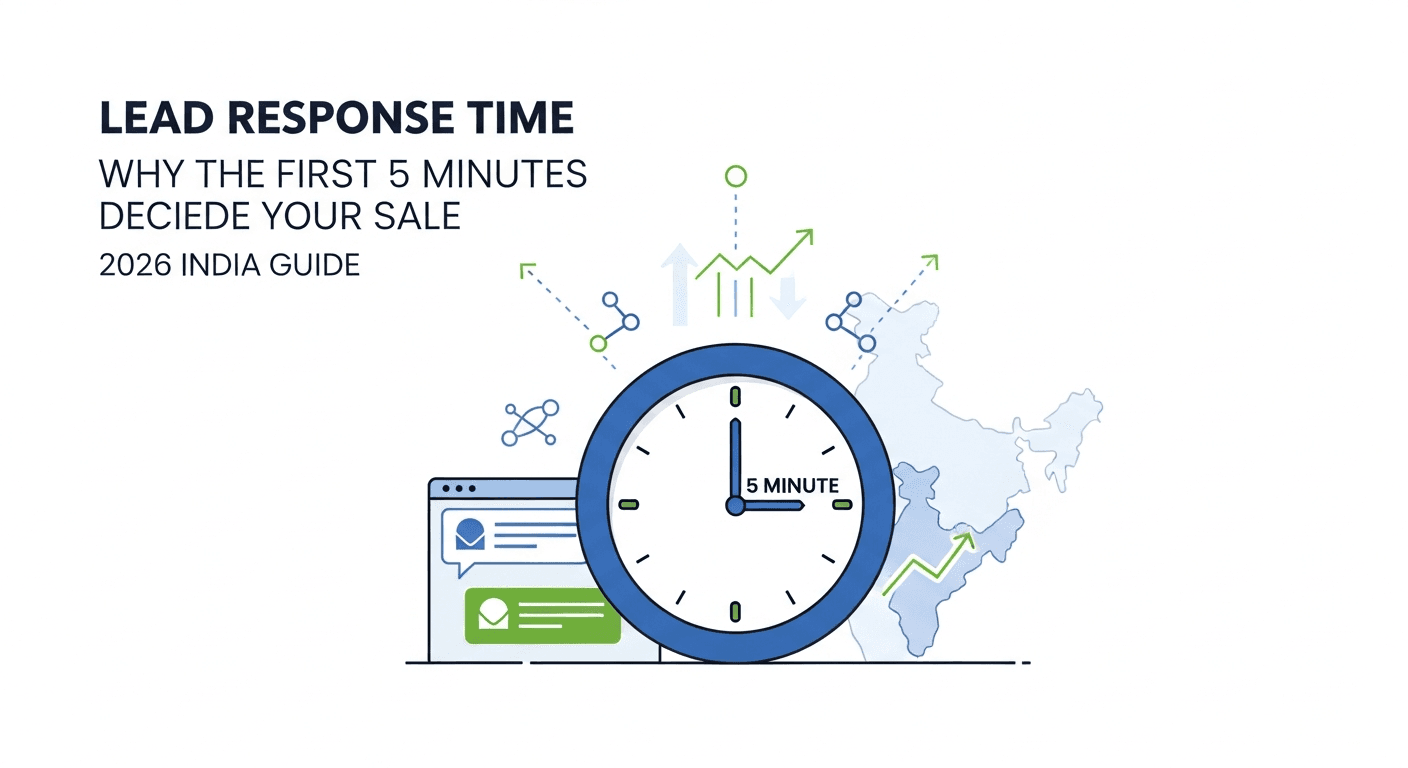
- Response delay: A lead messages at 11am; the rep replies at 3pm. The competitor replied in 4 minutes.
Based on data from 600+ Indian businesses onboarded by Kraya, businesses without a CRM convert 1–2% of leads at 25–100 leads per day. With a WhatsApp CRM in place, the same volume converts at 7–8% — with no change in the product or the team.
"80% of sales happen after the 5th to 12th follow-up. Manual processes miss those touchpoints silently. The rep doesn't realise until the quarter ends and the funnel is empty." — WhatsApp sales consultant, Bengaluru
Does WhatsApp CRM Require the Business API?
Yes. A legitimate WhatsApp CRM with shared inbox, multi-rep support, and bulk automation runs on the WhatsApp Business API (WABA) — not the free WhatsApp Business app. The free app is single-user, cannot be shared across a team, and blocks automated sequences at scale.
WABA is applied for through a BSP (the WhatsApp CRM vendor usually handles this as part of onboarding). Approval typically takes 1–3 business days. Once approved, your number is upgraded and the CRM features activate.
Running automation through unofficial methods on a regular WhatsApp number is a ban risk. See WhatsApp automation ban risks for the specific behaviors Meta flags.
Best WhatsApp CRM Software for Indian Businesses in 2026
Five platforms dominate the Indian market in 2026. The right one depends on whether you need AI-led follow-ups, e-commerce integrations, or enterprise-scale routing.
| Tool | Best For | Shared Inbox | AI Follow-up | Starting Price |
|---|---|---|---|---|
| Kraya | Service businesses, lead-heavy SMBs | Conversation lock + AI suggestions | Branching on reply intent | ₹2,999/month |
| Wati | Enterprise support teams (50+) | Role-based access, mature workflows | Rule-based sequences | ₹2,499/month |
| AiSensy | D2C broadcast, very small teams | Simple team view | Broadcast-led, manual follow-ups | ₹999/month |
| Interakt | E-commerce (Shopify/WooCommerce) | Good ownership rules | Drip flows, paid tier required | ₹2,499/month |
| Gallabox | Retail, clean UX preference | Strong team chat | Drip sequences, no AI branching | ₹2,099/month |
For a deeper comparison between the top three, see Wati vs Interakt vs Kraya: which is right for your business.
How Much Does WhatsApp CRM Cost in India?
WhatsApp CRM pricing in India has two components: the SaaS subscription plus Meta's conversation-based charges (charged directly by Meta through your BSP).
At 100 inbound leads per day, a typical Indian SMB pays ₹4,500–₹7,200/month total — split between the SaaS tier (₹2,999–₹4,999) and Meta conversation costs (₹0.58–₹0.78 per marketing conversation initiated).
Utility and service conversations (responses to customer-initiated messages) are cheaper. A business that responds to inbound WhatsApp leads rather than running outbound blasts will see lower Meta fees per month.
Can a WhatsApp CRM Help With Automated Follow-Ups?
Yes — this is the primary ROI driver for most Indian SMBs. A WhatsApp CRM triggers follow-ups based on reply behaviour, not just time delays. If a lead reads a message but doesn't reply, a different follow-up fires than if they replied with a question. If they haven't read a message in 24 hours, a different touchpoint activates.
The typical sequence for a service business: Day 0 auto-reply within 30 seconds → Day 1 qualification question → Day 3 value message → Day 7 gentle nudge → Day 14 final check-in. Each step is conditional on whether the lead replied or went silent.
See the full guide on WhatsApp follow-up messages that get replies for ready-to-use templates. For building sequences specific to cold prospects, WhatsApp cold outreach templates covers the structure and timing that converts.
How to Choose the Right WhatsApp CRM for Your Team
Three questions narrow the field quickly:
- How many reps will use it simultaneously? For 1–3 reps, most tools work. For 10+, shared inbox quality and routing logic matter significantly. Wati handles large teams better; Kraya handles AI-driven follow-up at any team size.
- What type of business are you? E-commerce → Interakt (Shopify integration is natively built). Service/consultancy/real estate → Kraya (lead management and follow-up depth). Enterprise support → Wati (routing at scale).
- Do you need AI or rule-based automation? Rule-based is cheaper and simpler to set up. AI-driven automation (Kraya) branches based on conversation content and reply intent — better for complex sales cycles but needs more configuration.
"We tested three WhatsApp CRMs over two months. Wati had the best-looking dashboard. Kraya actually followed up on every lead without me checking. That's the difference." — Co-founder, fintech startup, Mumbai
How to Set Up WhatsApp CRM: Step-by-Step
Setup takes 1–3 business days if your WhatsApp number isn't already registered on a Business account:
- Pick your WhatsApp CRM vendor and sign up for a trial
- Provide your business details for WABA verification (Meta requires business name, address, and category)
- Port or register your WhatsApp number through the BSP (the vendor handles this)
- Set up your shared inbox — create user accounts for each rep, assign lead routing rules
- Configure your welcome message and first follow-up sequence
- Connect lead sources (website chat widget, Facebook ads, your own manual import) to the inbox
Most Indian BSPs like Kraya include onboarding support. WABA approval is handled within the onboarding flow — you don't navigate Meta's Business Manager independently.
Frequently Asked Questions
Is WhatsApp CRM legal in India?
Yes. WhatsApp CRMs operating on the official WhatsApp Business API are fully compliant. The API is Meta's sanctioned pathway for businesses. The only legal concern is messaging contacts who haven't opted in — which the WABA policy requires you to handle.
Can I use WhatsApp CRM without the Business API?
You can use basic WhatsApp Business app features (labels, quick replies, away message) without the API — but you won't get a true shared inbox, automated sequences, or multi-rep support. For teams handling more than 20–30 leads per day, the Business API is effectively required.
What happens to existing WhatsApp chats when I switch to a CRM?
Historical chats on your number don't migrate automatically. New conversations go into the CRM inbox from the activation date. If you have important lead history, export it before switching. Most WhatsApp CRM vendors have a migration guide in their onboarding documentation.
Does WhatsApp CRM work for D2C brands?
Yes, but with a different setup focus. D2C brands typically use WhatsApp CRM for abandoned cart recovery, order updates, and broadcast campaigns rather than inbound lead management. Interakt and AiSensy are built specifically around this use case. See WhatsApp broadcast templates for D2C campaigns for a practical starting point.
How fast can a WhatsApp CRM improve response times?
With auto-reply configured on WABA, the first response to any inbound message fires in under 30 seconds — even at 3am. Human rep response to hot leads (those who've replied) depends on team availability, but routing notifications ensure the right rep is alerted immediately. Most businesses see their average first-response time drop from 1–3 hours to under 5 minutes within the first week of using a WhatsApp CRM.
Which WhatsApp CRM works best for real estate businesses in India?
Real estate businesses benefit most from WhatsApp CRMs with AI-driven follow-up and lead qualification built in — because property enquiries typically require 8–12 touchpoints before a site visit is booked. Kraya's AI qualification and conversation memory handles this automatically. For a full breakdown, see WhatsApp CRM for real estate in India.
READY TO TRY KRAYA?
See Kraya — the WhatsApp CRM Indian businesses are switching to
Book a free demo. We'll set up Kraya on your WhatsApp Business number, walk through how AI handles enquiries, follow-ups, and lead scoring — customised to your business.
Book a Free Call →No credit card. 15-minute setup. Personalised to your business.